Random book quote

Lukin

New Member
Joined
Jan 31, 2013
Messages
902
Reaction score
5
Here in this thread, you can just pour out your favorite quote or some random quote. You can even just flip to a page randomly and select a passage there and post it here (this is what i did).

The quote I'm gonna use is from Celine's book Death on the Installment Plan, a witty French book. I think this was written during World War II, but i'm not certain about that.

Begin.
__________________________________________

She was always keeping after me, trying to make me converse: “Good morning, Ferdinand! Hello! Good morning!” I was all hot and bothered. Her expression was so adorable . . . Plenty of times I almost fell. But I’d pull myself together quick . . . I reminded m yself of all the stuff I had on my mind . . . I saw Lavelongue’s face, and Gorloge, all mixed up . . . I had plenty to choose from to make me puke . . . Madame Mehon . . . Sakya-Muni . . . I only had to sniff, my nose was always in the shit. I answered inside: “Go on talking, baby doll, go right ahead . . . you won’t get a rise out of me . . . You can laugh your head off . . . smile like a dozen frogs . . . You won’t catch me . . . I’m hardened, take it from me, I’ve had it up to here.” I thought of my father . . . his scenes, the bilge he was always dishing out . . . all the shit that was waiting for me . . . the lousy jobs . . . the crummy customers, all the beans, the noodles, the deliveries . . . the bosses . . . all the thrashings I’d had . . . in the Passage . . . If I had any desire to kid around, that knocked it right out of me . . . I was convulsed with memories . . . I scraped my ass with them . . . I was so mad I tore off whole patches of skin . . . My bleeding ass! No, this skirt wasn’t going to take me. Maybe she was good, maybe she was marvelous! Let her be a thousand times more radiant and beautiful, you wouldn’t catch me going soft on her . . . She wouldn’t wring a single sigh out of me . . . She could cut her face in ribbons to please me, she could roll them around her neck, she could cut three fingers off her hand and stick them up my ass, she could buy herself a pure-gold pussy! I still wouldn’t talk to her! Never! . . . I wouldn’t even kiss her! All that was the bunk, more of the same. And that was that. I preferred to stare at her old man, to look him up and down . . . that kept me from having dumb ideas . . . I drew comparisons . . . He was part turnip . . . green diluted blood . . . part carrot too, on account of the squiggly hairs coming out of his ears and at the bottom of his cheeks . . . How had he ever got hold of this beauty? . . . It couldn’t have been money . . . Then it must have been a mistake . . . Of course, you’ve got to remember, women are always in a hurry . . . They’ll grow in anything . . . any old garbage will do . . . They’re just like flowers . . . The most beautiful they are, the worse the manure stinks . . . The season is short. Bzing! And the way they lie all the time . . . I’d seen some horrible examples. They never stop. It’s their perfume. That’s the long and the short of it.

_______________________
Hope this will be a good thread, as I'm not sure if many people read books at all here...
 
Language and Myth by Cassirer

___________________

Now it is here, in this intuitive creative form of myth, and not in the formation of our discursive theoretical concepts, that we must look for the key which may unlock for us the secrets of the original conceptions of language. The formulation of language, too, should not be traced back to any sort of reflective contemplation, to the calm and clearheaded comparison of given sense impressions and the abstraction of definite attributes; but here again we must abandon this static point of view for the comprehension of the dynamic process which produces the verbal sound out of its own inner drive. To be sure, this retrospect in itself is not enough; for through it we are merely brought to the further, more difficult question, how it i spossible for anything permanent to result from such a dynamism, and why the vague billowing and surging of sensory impressions and feelings should give rise to an objective, verbal "structure." The modern science of language, in its efforts to elucidate the "origin" of language, has indeed gone back frequently to Hamann's dictum, that poetry is "the mother-tongue of humanity"; its scholars have emphasized the fact that speech is rooted not in the prosaic, but in the poetic aspect of life, so that its ultimate basis must be sought not in preoccupation with the objective view of things and their classification according to certain attributes, but in the primitive power of subjective feeling. But although this doctrine may seem, at first sight, to evade the vicious circle into which the theory of logical expression is ever lapsing, in the end it also cannot bridge the gulf between the purely denotative and the expressive function of speech. In this theory, too, there always remains a sort of hiatus between the lyrical aspect of verbal expression and its logical character; what remains obscure is exactly that emancipation whereby a sound is transformed from an emotional utterance into a denotative one.
 
“Do you remember the time… when simple things made you happy? Do you remember the time… when little things made you laugh? You know, Life is simple, because the best is yet to come…”

Dreamer's Awakening -- Ramon Reyes, AKA Keiro here on AD... the book is still in the process of being written... but I thought it fitting.
 
“Do you remember the time… when simple things made you happy? Do you remember the time… when little things made you laugh? You know, Life is simple, because the best is yet to come…”

Dreamer's Awakening -- Ramon Reyes, AKA Keiro here on AD... the book is still in the process of being written... but I thought it fitting.

cool, i'm working on a book too. Dunno how i will call the title yet.
 
it is a far better thing i do now than i ever did(words to that effect)tale of two cities charles dickins
 
[FONT=&quot]It was the best of times, it was the worst of times, it was the age of wisdom, it was the age of foolishness, it was the epoch of belief, it was the epoch of incredulity, it was the season of Light, it was the season of Darkness, it was the spring of hope, it was the winter of despair, we had everything before us, we had nothing before us, we were all going direct to heaven, we were all going direct the other way - in short, the period was so far like the present period, that some of its noisiest authorities insisted on its being received, for good or for evil, in the superlative degree of comparison only.[/FONT]
[FONT=&quot]Charles Dickens – A Tale of Two Cities[/FONT]
[FONT=&quot] [/FONT]
[FONT=&quot]When God hands you a gift, he also hands you a whip; and the whip is intended solely for self-flagellation. [/FONT]
[FONT=&quot]Truman Capote - Music for Chameleons[/FONT]
 
222789-M.jpg


ISMENE
Dishonour them I do not.
But nor am I strong enough
To defy the laws of the land.


ANTIGONE
Live, then; and live with your choice.
I am going to bury his body.


ISMENE
I fear for you, Antigone.

ANTIGONE
Better fear for yourself.

ISMENE
Oh, stop! This must never get out.

ANTIGONE
No. No. Broadcast it.
Your cover-ups sicken me.
I have nothing to hide
From the powers that see all.
I'm doing what has to be done.


ISMENE
What are you, Antigone?
Hot-headed or cold-blooded?
This thing cannot be done.


ANTIGONE
But it still has to be tried.

ISMENE
You are mad. You don't have a chance.

ANTIGONE
Here and now, Ismene,
I hate you for this talk.
And the dead are going to hate you.
Call me mad if you like
But leave me alone to do it.
If Creon has me killed,
Where's the disgrace in that?
The disgrace would be to avoid it.


(Exit ANTIGONE)

ISMENE
Nothing's going to stop you.
But nothing's going to stop
The ones that love you, sister,
From keeping on loving you.


(Exit ISMENE)
 
She was fast asleep.

Gabriel, leaning on his elbow, looked for a few moments
unresentfully on her tangled hair and half-open mouth, listening to
her deep-drawn breath. So she had had that romance in her life: a
man had died for her sake. It hardly pained him now to think how
poor a part he, her husband, had played in her life. He watched her
while she slept, as though he and she had never lived together as
man and wife. His curious eyes rested long upon her face and on
her hair: and, as he thought of what she must have been then, in
that time of her first girlish beauty, a strange, friendly pity for her
entered his soul. He did not like to say even to himself that her
face was no longer beautiful, but he knew that it was no longer the
face for which Michael Furey had braved death.

Perhaps she had not told him all the story. His eyes moved to the
chair over which she had thrown some of her clothes. A petticoat
string dangled to the floor. One boot stood upright, its limp upper
fallen down: the fellow of it lay upon its side. He wondered at his
riot of emotions of an hour before. From what had it proceeded?
From his aunt's supper, from his own foolish speech, from the wine
and dancing, the merry-making when saying good-night in the hall,
the pleasure of the walk along the river in the snow. Poor Aunt
Julia! She, too, would soon be a shade with the shade of Patrick
Morkan and his horse. He had caught that haggard look upon her
face for a moment when she was singing Arrayed for the Bridal.
Soon, perhaps, he would be sitting in that same drawing-room,
dressed in black, his silk hat on his knees. The blinds would be
drawn down and Aunt Kate would be sitting beside him, crying
and blowing her nose and telling him how Julia had died. He
would cast about in his mind for some words that might console
her, and would find only lame and useless ones. Yes, yes: that
would happen very soon.

The air of the room chilled his shoulders. He stretched himself
cautiously along under the sheets and lay down beside his wife.
One by one, they were all becoming shades. Better pass boldly into
that other world, in the full glory of some passion, than fade and
wither dismally with age. He thought of how she who lay beside
him had locked in her heart for so many years that image of her
lover's eyes when he had told her that he did not wish to live.

Generous tears filled Gabriel's eyes. He had never felt like that
himself towards any woman, but he knew that such a feeling must
be love. The tears gathered more thickly in his eyes and in the
partial darkness he imagined he saw the form of a young man
standing under a dripping tree. Other forms were near. His soul
had approached that region where dwell the vast hosts of the dead.
He was conscious of, but could not apprehend, their wayward and
flickering existence. His own identity was fading out into a grey
impalpable world: the solid world itself, which these dead had one
time reared and lived in, was dissolving and dwindling.

A few light taps upon the pane made him turn to the window. It
had begun to snow again. He watched sleepily the flakes, silver
and dark, falling obliquely against the lamplight. The time had
come for him to set out on his journey westward. Yes, the
newspapers were right: snow was general all over Ireland. It was
falling on every part of the dark central plain, on the treeless hills,
falling softly upon the Bog of Allen and, farther westward, softly
falling into the dark mutinous Shannon waves. It was falling, too,
upon every part of the lonely churchyard on the hill where Michael
Furey lay buried. It lay thickly drifted on the crooked crosses and
headstones, on the spears of the little gate, on the barren thorns.
His soul swooned slowly as he heard the snow falling faintly
through the universe and faintly falling, like the descent of their
last end, upon all the living and the dead.
[FONT=&quot]James Joyce – The Dead[/FONT]
 
"Please--tame me!" he said.
"I want to, very much," the little prince replied. "But I have not much time. I have friends to discover, and a great many things to understand."
"One only understands the things that one tames," said the fox. "Men have no more time to understand anything. They buy things all ready made at the shops. But there is no shop anywhere where one can buy friendship, and so men have no friends any more. If you want a friend, tame me . . ."
"What must I do, to tame you?" asked the little prince.
"You must be very patient," replied the fox. "First you will sit down at a little distance from me--like that--in the grass. I shall look at you out of the corner of my eye, and you will say nothing. Words are the source of misunderstandings. But you will sit a little closer to me, every day . . ."
The next day the little prince came back.
"It would have been better to come back at the same hour," said the fox. "If, for example, you come at four o'clock in the afternoon, then at three o'clock I shall begin to be happy. I shall feel happier and happier as the hour advances. At four o'clock, I shall already be worrying and jumping about. I shall show you how happy I am! But if you come at just any time, I shall never know at what hour my heart is to be ready to greet you . . . One must observe the proper rites . . ."
"What is a rite?" asked the little prince.
"Those also are actions too often neglected," said the fox. "They are what make one day different from other days, one hour from other hours. There is a rite, for example, among my hunters. Every Thursday they dance with the village girls. So Thursday is a wonderful day for me! I can take a walk as far as the vineyards. But if the hunters danced at just any time, every day would be like every other day, and I should never have any vacation at all."


So the little prince tamed the fox. And when the hour of his departure drew near--
"Ah," said the fox, "I shall cry."
"It is your own fault," said the little prince. "I never wished you any sort of harm; but you wanted me to tame you . . ."
"Yes, that is so," said the fox.
"But now you are going to cry!" said the little prince.
"Yes, that is so," said the fox.
"Then it has done you no good at all!"
"It has done me good," said the fox, "because of the color of the wheat fields." And then he added:
"Go and look again at the roses. You will understand now that yours is unique in all the world. Then come back to say goodbye to me, and I will make you a present of a secret."


The little prince went away, to look again at the roses.
"You are not at all like my rose," he said. "As yet you are nothing. No one has tamed you, and you have tamed no one. You are like my fox when I first knew him. He was only a fox like a hundred thousand other foxes. But I have made him my friend, and now he is unique in all the world."
And the roses were very much embarassed.
"You are beautiful, but you are empty," he went on. "One could not die for you. To be sure, an ordinary passerby would think that my rose looked just like you--the rose that belongs to me. But in herself alone she is more important than all the hundreds of you other roses: because it is she that I have watered; because it is she that I have put under the glass globe; because it is she that I have sheltered behind the screen; because it is for her that I have killed the caterpillars (except the two or three that we saved to become butterflies); because it is she that I have listened to, when she grumbled, or boasted, or ever sometimes when she said nothing. Because she is my rose.


And he went back to meet the fox.
"Goodbye," he said.
"Goodbye," said the fox. "And now here is my secret, a very simple secret: It is only with the heart that one can see rightly; what is essential is invisible to the eye."
"What is essential is invisible to the eye," the little prince repeated, so that he would be sure to remember.
"It is the time you have wasted for your rose that makes your rose so important."
"It is the time I have wasted for my rose--" said the little prince, so that he would be sure to remember.
"Men have forgotten this truth," said the fox. "But you must not forget it. You become responsible, forever, for what you have tamed. You are responsible for your rose . . ."
"I am responsible for my rose," the little prince repeated, so that he would be sure to remember.
[FONT=&quot]Antoine de Saint-Exupery - The Little Price[/FONT]
 
9780393060546-L.jpg


Book One: The Founders, chapter XIV The Motive Forces of the Historical Process, section 2 'Social being and consciousness'

page 283

Nor should it be supposed that ‘Social being determines consciousness’ is an eternal law of history. The Critique of Political Economy describes the dependence of social consciousness on the relations of production as a fact that has always existed in the past, but it does not follow that it must be so for ever. Socialism, as Marx saw it, was vastly to enlarge the sphere of creative activity outside the production process, freeing consciousness from mystification and social life from reified forces. In such conditions, consciousness, i.e. the conscious will and initiative of human beings, would be in control of social processes, so that it would determine social being rather than the other way about. The maxim, in fact, appears to relate to ideological consciousness, i.e. that which is unaware of its own instrumental character. On the other hand, The German Ideology assures us that consciousness can never be anything other than conscious life, i.e. the manner in which men experience situations that arise independently of consciousness. It may be, however, that these two views can be reconciled. The rule that social being determines consciousness can be regarded as a particular case of the more general rule that consciousness is identical with conscious life- a particular case applying to the whole of past history, in which the products of human activity have turned into independent forces dominating the historical process. When this domination ceases and social development obeys conscious human decisions, it will no longer be the case that ’social being determines consciousness’; but it will still be the case that consciousness is an expression of ‘life’, for this principle is one of epistemology and not of the philosophy of history. Consciousness of life is a function of ‘preconscious’ life, not of course in the sense of Schopenhauer or Freud but in the sense that thought and feeling and their expression in science, art, and philosophy are instruments related positively or negatively to man’s self-realization in empirical history. In other words, the situation in which social being determines consciousness is one in which consciousness is ‘mystified’, unaware of its true purpose, acting contrary to man’s interest and intensifying his servitude. When consciousness is liberated it becomes a means of strength instead of enslavement, aware of its own participation in the realization of man and of the fact that it is a component of the whole human being. It controls the relations of production instead of being controlled by them. It is still the expression and instrument of life aspiring towards fullness, but it furthers that aspiration instead of impoverishing life, and is a source of creative energy instead of a brake on it. In short, the liberated consciousness is de-mystified and aware of its contribution to the expansion of human opportunities. Consciousness at al times is an instrument of life, but throughout history up to now (prehistory) it has been determined by relations of production that are independent of the human will. This interpretation, at all events, is consistent with Marx’s writings, though he does not anywhere expressly adopt it.
 
Too depressing lol.. But too good nonetheless.

I wonder why I have never heard of that James Joyce book. Hmmm.


[FONT=&quot]Irish stories aren't American stories. The Americans love a happy ending and life just isn't like that. The Dead was actually made into a film starring the wonderful, Angelica Huston and Donal McCann; it was the last film her father, John Huston, made and it was an incredible exit at that. The screen play was written by her brother Tony, who thankfully changed it very little. The only addition not in Joyce's story is the character, Mr. Grace, who was introduced to recite one of John Huston's favorite poems translated by Lady Gregory, "Broken Vows." Another bit of trivia, it rarely snows in Ireland so John Huston brought an expensive snow machine to create a winter scene. However, they didn't need it because quite miraculously, it snowed for the first time in years. Here’s the full poem, the one in the film was shortened and altered to suit the character and film.[/FONT]

[FONT=&quot][/FONT]


[FONT=&quot]Broken Vows (Donal Og)[/FONT]
[FONT=&quot] [/FONT]
[FONT=&quot]It is late last night the dog was speaking of you;
the snipe was speaking of you in her deep marsh.
It is you are the lonely bird through the woods;
and that you may be without a mate until you find me.

You promised me, and you said a lie to me,
that you would be before me where the sheep are flocked;
I gave a whistle and three hundred cries to you,
and I found nothing there but a bleating lamb.

You promised me a thing that was hard for you,
a ship of gold under a silver mast;
twelve towns with a market in all of them,
and a fine white court by the side of the sea.

You promised me a thing that is not possible,
that you would give me gloves of the skin of a fish;
that you would give me shoes of the skin of a bird,
and a suit of the dearest silk in Ireland.

It is early in the morning that I saw him coming,
going along the road on the back of a horse;
he did not come to me;
he made nothing of me;
and it is on my way [/FONT]
[FONT=&quot]home that I cried my fill.

When I go by myself to the Well of Loneliness,
I sit down and I go through my trouble;
when I see the world and do not see my boy,
he that has amber shade in his
hair.

It was On that Sunday I gave
my love to you;
the Sunday that is last before Easter Sunday.
And myself on my knees reading the Passion;
and my two eyes
giving my love to you for ever.

My mother said to me not to be talking with you to-day,
or tomorrow, or on the Sunday;
it was a bad time she took for telling me that;
it was shutting the door after the house was robbed.

My heart is as black as the blackness of the sloe,
or the black coal that is on the smith's forge;
or as the sole of a shoe left in white halls;
it was you put that darkness into my life.

You have taken the east from me;
you have taken the west from me;
you have taken what is before me and what is behind me;
you have taken the moon,
you have taken the sun from me;
and my fear is great
that you have taken God from me!
[/FONT]​
[FONT=&quot] [/FONT]
[FONT=&quot] [/FONT]
 
Bioinformatics-in-the-Post-Genomic-Era-9780321173867.jpg


Chapter 8 MEDICAL INFORMATICS AND INFORMATION-BASED MEDICINE, section MODELING AND PREDICTING DISEASE, part PRESYMPTOMATIC TESTING


page 333

PRESYMPTOMATIC TESTING

Presymptomatic testing refers to a strategy for predicting the onset of metabolic diseases based on detectable, but subclinical, chemical changes and genetic predispositions. Such changes often involve increased levels of marker proteins or expressed messages. Not surprisingly, the same kinds of changes are often detectable between the time of initial exposure to a pathogen and the appearance of symptoms. Presymptomatic testing may be particularly valuable during this timeframe in situations where early intervention can prevent the disease. For example, an individual who has been exposed to variola virus-- the pathogen responsible for smallpox-- can be protected by vaccination within three days of exposure. (Vaccination within seven days of exposure will offer some degree of protection and reduce the severity of symptoms [14].) The initial process involves infection of macrophages and migration to regional lymph nodes. The virus then replicates at multiple sites, including spleen, lymph nodes, and skin.

This discussion has two focal points: identification of presymptomatic molecular events in an infected individual and the direct identification of microorganisms and other pathogens. Both are relevant to the deployment of information-based medicine. Fortunately, high-throughput sequencing initiatives have begun to drive the distribution of large amounts of sequence information for a variety of microorganisms and viruses. Furthermore, complete sequences are often not required. One excellent example is an initiative launched by Dupont Qualicon (a Wilmington, Delaware-based subsidiary of Dupont Inc.). The goal of this initiative is to collect and disseminate ribosomal DNA fingerprints for as many microorganisms as possible. The fingerprints are collected using restriction enzyme digestion and an automated system called ribotyping. In most cases, ribotypes are specific enough to distinguish between strains of bacteria that have undergone mutation-- an important capability for tracking the migration of new bacterial strains around the globe and for treating individual patients who are infected with a drug-resistant organism. The latter is often the result of a newly mutated antibiotic-resistant bacterium finding its way to a new geographic location. A worldwide database of known pathogens that includes clinical information would be invaluable for treating such patients. Standard techniques are used to create new fingerprints, which are then matched against the database using pattern-identification software.


Presymptomatic Testing for Viral and Bacterial Infections

The identification of presymptomatic molecular events in infected individuals is likely to become relevant in situations where infection is suspected and the individual has a reason to be tested. In such situations, databases of diagnostic information that link a specific set of immune system parameters and other metabolic responses to a specific infection are likely to provide enormous value. Until the present time, such databases have not been widely available, and presymptomatic testing for viral and bacterial infections has been limited to simple diagnostic observations-- various cell counts and anti-body titers.

Presymptomatic Testing for Metabolic Diseases

Presymptomatic testing for metabolic diseases is complex because it involves measuring a large number of molecular-level parameters and their interactions. One might envision a straightforward process that includes initial genotyping, baseline measurements of key metabolic parameters, and ongoing measurement of these parameters based on a profile of known risk factors. More sophisticated analyses might include demographic history, family medical history, and a variety of environmental factors. Observed changes are used to track the progression from health to disease.

Surprisingly, access to a robust set of databases containing all relevant information and an appropriate set of search tools is insufficient to guarantee the success of presymptomatic testing. The reason is related to the level of precision that is required for meaningful comparisons. For example, mRNA profiles built using microarray technologies are subject to many sources of error. First, it must be noted that all measurements utilizing two-color fluorescence are measures of the relative gene-expression levels between control and experimental populations. Most researchers report results in terms of relative fold changes. The data can be normalized only if intensity measurements arising from both control and experimental samples are precisely proportional to the levels of each species of mRNA being measured. Unfortunately, such experiments embody many sources of systematic error, including background fluorescence, differences between the relative response to laser excitation of the two dyes used for control and experimental samples, differences in the incorporation frequency of the dye-labeled bases during reverse transcription, and quenching effects that reduce the signal when fluorescence intensity exceeds certain levels. Most of these errors can be quantified and corrected; however, one source of error that is difficult to manage involves cross hybridization between unrelated genes that share similar sequences. Furthermore, both protein- and gene-expression levels must be quantified across a relatively large dynamic range from individual molecules to tens of thousands of copies. Traditional tools are notoriously inaccurate across such ranges.

(part ends)

lol, sorry if it has been a long read, I promise that this won't happen again in next Random Book Quote post.
 
Last edited:
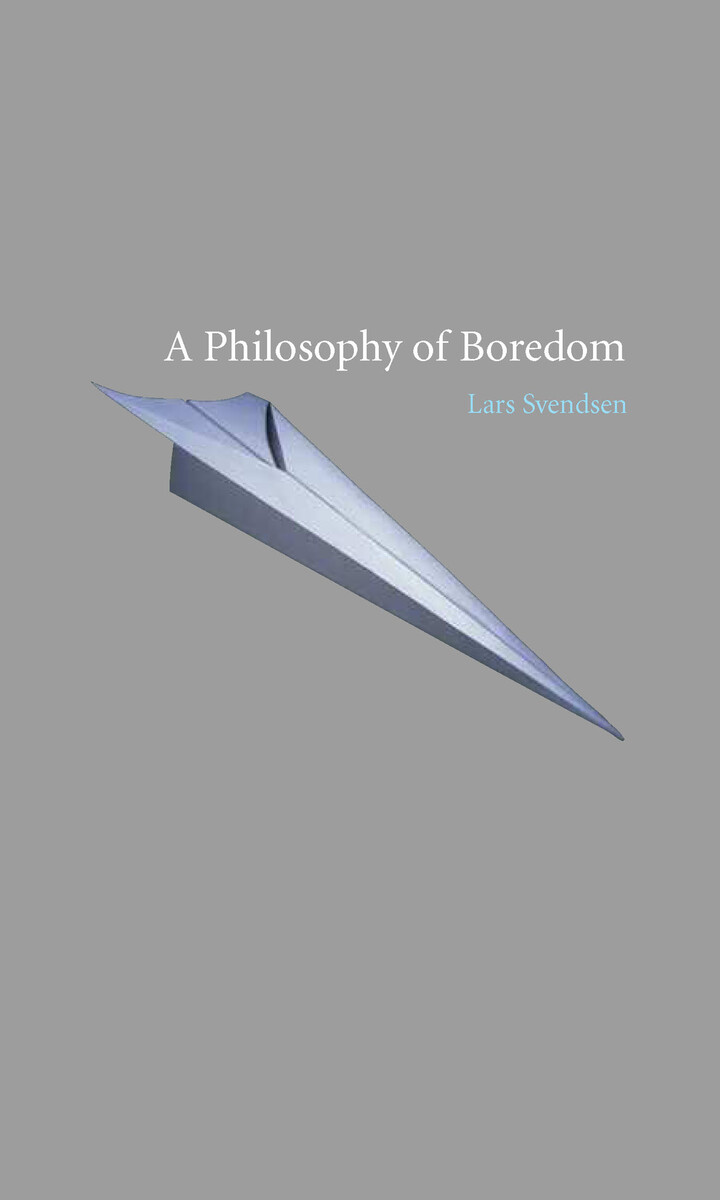
978-1-86189-606-3-frontcover.jpg


Chapter one The Problem of Boredom, first section BOREDOM AS A PHILOSOPHICAL PROBLEM

:giggle: a paragraph from page 17 :giggle:

Boredom has become associated with drug abuse, alcohol abuse, smoking, eating disorders, promiscuity, vandalism, depression, aggression, animosity, violence, suicide, risk behaviour, etc. There are statistical grounds for making the connection. This ought not to surprise anyone, for the Early Fathers of the Church were already well aware of such a connection, considering the pre-modern forerunner of boredom, acedia, to be the worst sin, since all other sins derived from it. That boredom has serious consequences for a society, not only for individuals, ought to be beyond all doubt. That it is also serious for individuals is because boredom involves a loss of meaning, and a loss of meaning is serious for the afflicted person. I do not believe that we can say that the world appears to be meaningless because one is bored, or that one is bored because the world appears to be meaningless. There is hardly a simple relationship here between a cause and an effect. But boredom and a loss of meaning are connected in some way. In The Anatomy of Melancholy (1621), Robert Burton claimed that 'we can talk about 88 degrees of melancholy, since diverse people are diversely attacked and descend deeper or are dipped less deeply in the hellish pit.' Personally, I am unable to distinguish all that precisely between various degrees of boredom, but it covers everything from a slight discomfort to a serious loss of all meaning. For most of us, boredom is bearable-- but not for all. It is of course always tempting to ask the person complaining of boredom or melancholy to 'pull himself together', but, as Ludvig Holberg points out, this is 'just as impossible to do as ordering a dwarf to make himself one cubit taller than he is'.
 
cool, i'm working on a book too. Dunno how i will call the title yet.

Awesome. :)

I've been writing this one for just a little over a year. (well, actually more like six months... but I've been doing a lot of world-building. Notes and stuff...)
 
Awesome. :)

I've been writing this one for just a little over a year. (well, actually more like six months... but I've been doing a lot of world-building. Notes and stuff...)

Cool. I've been working on mine for a while. On and off and on and off, really. It is good- taking notes over the time, your theme might be modified a bit to fit the higher plane of coherence.

Can you tell me a little what it is about?

Mine is dystopian one, mostly political porn stuff. About 30 years from now or so. I've introduced a concept of cybersocialism in this one.
 
Last edited:
[FONT=&quot]It was the best of times, it was the worst of times, it was the age of wisdom, it was the age of foolishness, it was the epoch of belief, it was the epoch of incredulity, it was the season of Light, it was the season of Darkness, it was the spring of hope, it was the winter of despair, we had everything before us, we had nothing before us, we were all going direct to heaven, we were all going direct the other way - in short, the period was so far like the present period, that some of its noisiest authorities insisted on its being received, for good or for evil, in the superlative degree of comparison only.[/FONT]
[FONT=&quot]Charles Dickens – A Tale of Two Cities[/FONT]

[FONT=&quot]When God hands you a gift, he also hands you a whip; and the whip is intended solely for self-flagellation. [/FONT]
[FONT=&quot]Truman Capote - Music for Chameleons[/FONT]

he did some great quotes
 
This one is for you, James Mac Crary.

on-bullshit3.jpg


page 1-2

One of the most salient features of our culture is that there is so much bullshit. Everyone knows this. Each of us contributes his share. But we tend to take the situation for granted. Most people are rather confident of their ability to recognize bullshit and to avoid being taken in by it. So the phenomenon has not aroused much deliberate concern, nor attracted much sustained inquiry.
In consequence, we have no clear understanding of what bullshit is, why there is so much of it, or what functions it serves. And we lack a conscientiously developed appreciation of what it means to us. In other words, we have no theory. I propose to begin the development of a theoretical understanding of bullshit, mainly by providing some tentative and exploratory philosophical analysis. I shall not consider the rhetorical uses and misuses of bullshit. My aim is simply to give a rough account of what bullshit is and how it differs from what it is not-- or (putting it somewhat differently) to articulate, more or less sketchily, the structure of its concept.


...............

page 59-64

For most people, the fact that a statement is false constitutes in itself a reason, however weak and easily overridden, not to make the statement. For Saint Augustine's pure liar it is, on the contrary, a reason in favor of making it. For the bullshitter it is in itself neither a reason in favor nor a reason against. Both in lying and in telling the truth people are guided by their beliefs concerning the way things are. These guide them as they endeavor either to describe the world correctly or to describe it deceitfully. For this reason, telling lies does not tend to unfit a person for telling the truth in the same way that bullshitting tends to do. Through excessive indulgence in the latter activity, which involves making assertions without paying attention to anything except what it suits one to say, a person's normal habit of attending to the ways things are may become attenuated or lost. Someone who lies and someone who tells the truth are playing on opposite sides, so to speak, in the same game. Each responds to the facts as he understands them, although the response of the one is guided by the authority of the truth, while the response of the other defies that authority and refuses to meet its demands. The bullshitter ignores these demands altogether. He does not reject the authority of the truth, as the liar does, and oppose himself to it. He pays no attention to it at all. By virtue of this, bullshit is a greater enemy of the truth than lies are.
One who is concerned to report or to conceal the facts assumes that there are indeed facts that are in some way both determinate and knowable. His interest in telling the truth or in lying presupposes that there is a difference between getting things wrong and getting them right, and that it is at least occasionally possible to tell the difference. Someone who ceases to believe in the possibility of identifying certain statements as true and others as false can have only two alternatives. The first is to desist both from efforts to tell the truth from efforts to deceive. This would mean refraining from making any assertion whatever about the facts. The second alternative is to continue making assertions that purport to describe the way things are, but that cannot be anything but bullshit.
Why is there so much bullshit? Of course it is impossible to be sure that there is relatively more of it nowadays than at other times. There is more communication of all kinds in our time than ever before, but the proportion that is bullshit may not have increased. Without assuming that the incidence of bullshit is actually greater now, I will mention a few considerations that help to account for the fact that is currently so great.
Bullshit is unavoidable whenever circumstances require someone to talk without knowing what he is talking about. Thus the production of bullshit is stimulated whenever a person's obligations or opportunities to speak about some topic exceed his knowledge of the facts that are relevant to that topic. This discrepancy is common in public life, where people are frequently impelled-- whether by their own propensities or by the demands of others-- to speak extensively about matters of which they are to some degree ignorant. Closely related instances arise from the widespread conviction that it is the responsibility of a citizen in a democracy to have opinions about everything or at least everything that pertains to the conduct of his country's affairs. The lack of any significant connection between a persons opinions and his apprehension of reality will be even more severe, needless to say, for someone who believes it his responsibility, as a conscientious moral agent, to evaluate events and conditions in all parts of the world.


______________

I hate to make an announcement, but due to circumstances, I will have to take on a leave. So, I will be back online on AD around end of May or beginning of June.

Hopefully some of you will be online by then!

En garde.

Best,

Lukin. :wave:

P.S. I will dearly miss you, deaftears. I am meeting Peter Gabriel to head up with the news as of what you have been spilling thus so far.
 
tumblr_mk46otm4Ql1r2ytvro1_500.jpg


the great one:

down at the end of the bar
he used to bum
drinks, now he is a balding man and
I lean close:
you are the finest poet
of our age, you are the
only one that everybody
understands . . .

we drink coffee, we sit in his smal
poorly furnished house, his oil paintings
are on the walls. I am going to give him
money, paper, paint, a better
typewriter. he is going to give me some
original
manuscripts.

I look at him and sense that he fears
me. he coughs, his stomach must feel
oily, dense,
ill.

I tell him:
I know all about you:
you had a cruel Spanish
stepfather, you lived with
numerous whores, drank yourself
senseless,
starved . . .

yeah, he
says.

I lean closer:
in my own quiet way,
I am a worshipper of
heroes . . .

when I leave with his manuscripts (signed)
and one of his oils plus
3 wire-coiled and unreadable
notebooks
he doesn't come to the door with me. there is a
mirror and he sits looking into the
mirror and he
bows his head, ashamed and
finished.

"The Artist," an ancient sage had once said,
"is always sitting on the doorsteps of the
rich."

I swing into my caddy, throw the junk in the
back and
drive off.
 
Back
Top