Miss-Delectable
New Member
- Joined
- Apr 18, 2004
- Messages
- 17,160
- Reaction score
- 7
http://www.ccnmatthews.com/news/rel...earchText=false&showText=all&actionFor=569886
STATEMENT FROM CANADIAN BLOOD SERVICES REGARDING DONOR ELIGIBILITY OF PEOPLE WHO ARE DEAF
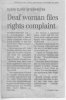
Today, a Peterborough newspaper published a story, which was subsequently redistributed nationally, about a woman who was prevented from having a third party present during a screening process to give blood. The matter requires clarification.
First and foremost, Canadian Blood Services welcomes and encourages people who are deaf to become regular blood donors. In fact, many of our existing donors are deaf, deafening or hard of hearing.
To ensure that Canada's blood supply is as safe as possible, Canadian Blood Services has implemented a multi-layered safety system. The first step in the process is the Record of Donation -- a questionnaire that assesses a person's state of health, potential for giving blood and potential risk factors to the blood system. Persons wishing to give blood must be able to comprehend that questionnaire and communicate with the screening healthcare personnel without the assistance of a third party (including interpreters).
The health screening interview is designed to provide the potential donor with the privacy necessary to respond truthfully to all questions. We acknowledge that accredited interpreters are professionally bound to protect the privacy of their clients, and we don't challenge their commitment. However, there is a risk of "peer pressure" from having a third party in the room which could influence the way a potential donor answers very sensitive, personal questions, and it is our duty to minimize risks. As with all our procedures, this process is designed with the safety of recipients in mind.
Deaf people can still donate blood, even if an interpreter does not accompany them into the screening booth. In the case of people who are deaf, deafening or hard of hearing, we allow the oral portion of the questionnaire to be completed in written form, in either of Canada's Official Languages. This enables our staff to communicate with deaf donors, privately, using a notepad or some other form of written communication to ask important follow-up questions during the screening interview.
According to earlier media reports, the individual from Peterborough referenced above, has the ability to write in English and could go through the screening process, but she has chosen not to. We respect her choice, however we want to reassure other deaf donors who are currently giving blood, or who may be considering it, that we value their contributions and hope they will continue to help other Canadians in need.
As a consultative organization, Canadian Blood Services regularly consults with various stakeholders across the country about many aspects of our business, including donor eligibility. We will continue to work with the Canadian Hearing Society and other stakeholder groups to discuss opportunities for deaf people to be increasingly involved in the blood system.
Every decision at Canadian Blood Services is made with the safety of the patient as our top priority. Patients have the right to the safest blood possible. Having said this, we do recognize that by casting a wide safety net, our policies may exclude some well-intentioned individuals donating blood. In no way is this to be considered a reflection on the individuals themselves.
www.bloodservices.ca
STATEMENT FROM CANADIAN BLOOD SERVICES REGARDING DONOR ELIGIBILITY OF PEOPLE WHO ARE DEAF
Today, a Peterborough newspaper published a story, which was subsequently redistributed nationally, about a woman who was prevented from having a third party present during a screening process to give blood. The matter requires clarification.
First and foremost, Canadian Blood Services welcomes and encourages people who are deaf to become regular blood donors. In fact, many of our existing donors are deaf, deafening or hard of hearing.
To ensure that Canada's blood supply is as safe as possible, Canadian Blood Services has implemented a multi-layered safety system. The first step in the process is the Record of Donation -- a questionnaire that assesses a person's state of health, potential for giving blood and potential risk factors to the blood system. Persons wishing to give blood must be able to comprehend that questionnaire and communicate with the screening healthcare personnel without the assistance of a third party (including interpreters).
The health screening interview is designed to provide the potential donor with the privacy necessary to respond truthfully to all questions. We acknowledge that accredited interpreters are professionally bound to protect the privacy of their clients, and we don't challenge their commitment. However, there is a risk of "peer pressure" from having a third party in the room which could influence the way a potential donor answers very sensitive, personal questions, and it is our duty to minimize risks. As with all our procedures, this process is designed with the safety of recipients in mind.
Deaf people can still donate blood, even if an interpreter does not accompany them into the screening booth. In the case of people who are deaf, deafening or hard of hearing, we allow the oral portion of the questionnaire to be completed in written form, in either of Canada's Official Languages. This enables our staff to communicate with deaf donors, privately, using a notepad or some other form of written communication to ask important follow-up questions during the screening interview.
According to earlier media reports, the individual from Peterborough referenced above, has the ability to write in English and could go through the screening process, but she has chosen not to. We respect her choice, however we want to reassure other deaf donors who are currently giving blood, or who may be considering it, that we value their contributions and hope they will continue to help other Canadians in need.
As a consultative organization, Canadian Blood Services regularly consults with various stakeholders across the country about many aspects of our business, including donor eligibility. We will continue to work with the Canadian Hearing Society and other stakeholder groups to discuss opportunities for deaf people to be increasingly involved in the blood system.
Every decision at Canadian Blood Services is made with the safety of the patient as our top priority. Patients have the right to the safest blood possible. Having said this, we do recognize that by casting a wide safety net, our policies may exclude some well-intentioned individuals donating blood. In no way is this to be considered a reflection on the individuals themselves.
www.bloodservices.ca